
Becoming an ambulance driver is one of the most rewarding career paths available to professional drivers in the UK. Whether you are aiming for a role with the NHS, a private ambulance service, or a patient transport provider, this guide covers everything you need to know about ambulance driver training in 2026 — licences, training, NHS requirements, salary, and how to apply.
What Licence Do You Need to Drive an Ambulance?
Most ambulances in the UK — including NHS emergency ambulances, rapid response vehicles, and patient transport vehicles — fall within the C1 weight category (vehicles between 3,500kg and 7,500kg). To drive these vehicles professionally, you need:
- A full UK car licence (Category B)
- A Category C1 licence (the 7.5 tonne licence)
- A valid Driver CPC qualification
- A satisfactory D4 medical examination
Some larger specialist ambulances or heavy rescue vehicles may require a full Category C (Class 2) licence. Always check the specific requirements with your prospective employer.
For a full guide to the C1 licence, read: Complete Guide to the C1 Licence UK 2026.
NHS Ambulance Driver Requirements
The NHS employs ambulance drivers across two main roles:
Emergency Medical Technician (EMT) / Paramedic
EMTs and paramedics drive emergency ambulances as part of their clinical role. In addition to the C1 licence and Driver CPC, these roles require clinical training and registration with the Health and Care Professions Council (HCPC). The driving qualification is just one component of a broader clinical training programme.
Patient Transport Service (PTS) Driver
PTS drivers transport non-emergency patients to and from hospital appointments. These roles typically require:
- A full UK car licence and C1 licence
- Driver CPC qualification
- A satisfactory DBS (Disclosure and Barring Service) check
- Basic first aid qualification
- Good communication skills and a caring attitude
PTS roles are often available through NHS trusts and private contractors such as NEPTS (Non-Emergency Patient Transport Services) providers.
Private Ambulance Driver Roles
The private ambulance sector in the UK has grown significantly in recent years. Private ambulance companies provide services including:
- Event medical cover (concerts, sporting events, festivals)
- Non-emergency patient transport
- Repatriation services
- Mental health transport
- Specialist clinical transport
Requirements vary by company and role, but most require a C1 licence, Driver CPC, and a basic first aid qualification as a minimum.
Step-by-Step: How to Become an Ambulance Driver
Step 1: Obtain Your C1 Licence
The C1 licence is the foundation of your ambulance driving qualification. The process involves:
- Passing a D4 Group 2 medical examination
- Applying for provisional C1 entitlement from the DVLA
- Passing the LGV theory tests (Parts 1a, 1b, and 2)
- Completing practical C1 training
- Passing the C1 practical driving test
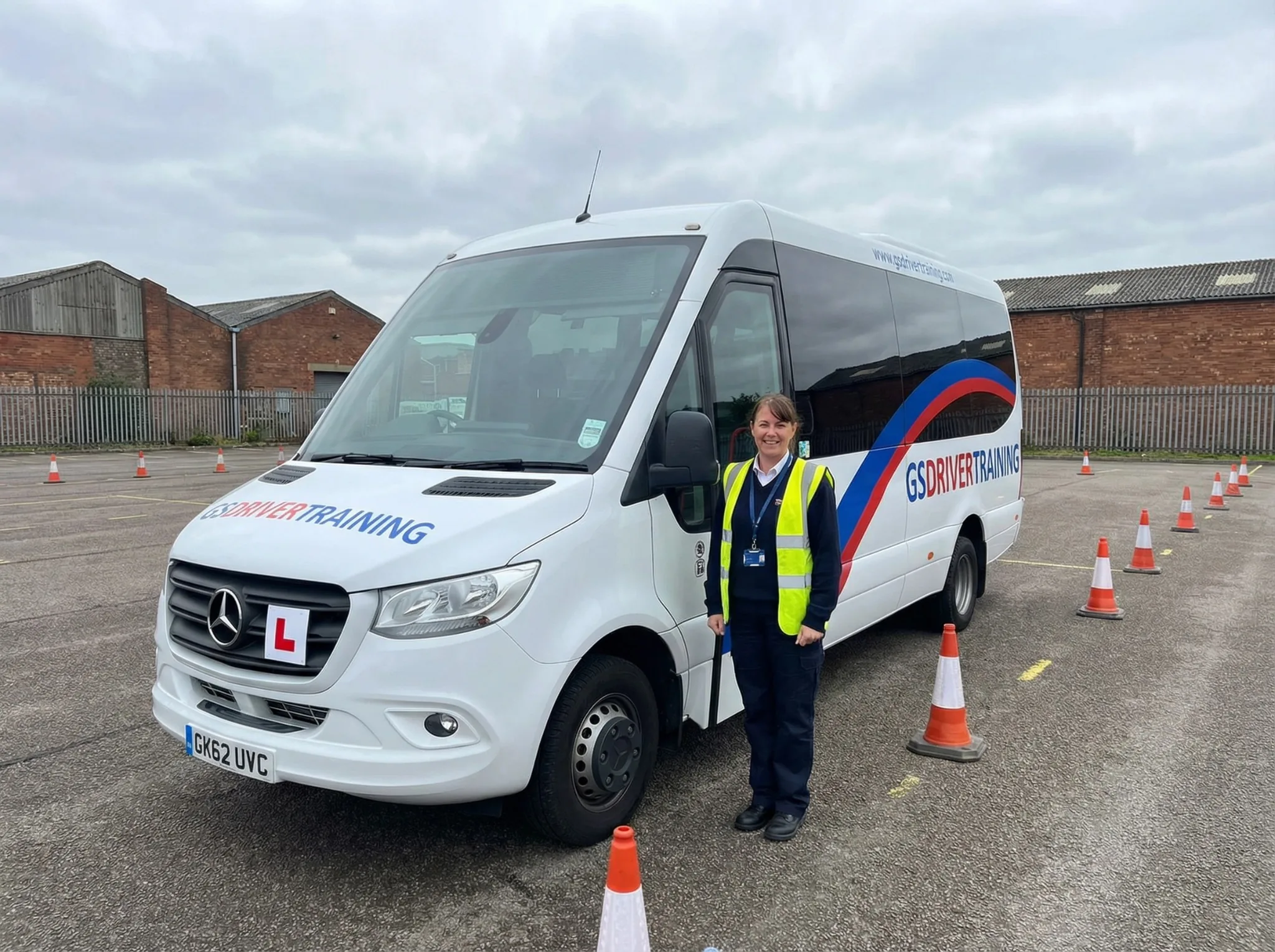
GS Driver Training offers dedicated C1 licence training at our Surrey centre. View our C1 training courses.
Step 2: Complete Driver CPC
If you will be driving an ambulance professionally, you must hold a Driver CPC qualification. This requires passing CPC Module 2 (case studies) and Module 4 (practical demonstration). Read: Complete Guide to Driver CPC UK 2026.
Step 3: Obtain a First Aid Qualification
Most ambulance driving roles require at least a basic first aid qualification. Options include:
- Emergency First Aid at Work (EFAW) — one day
- First Aid at Work (FAW) — three days
- IHCD Ambulance Aid — a more advanced qualification for patient-facing roles
Step 4: Complete a DBS Check
All ambulance driving roles require an enhanced DBS check due to the vulnerable nature of the people you will be transporting. Your employer will usually arrange this as part of the recruitment process.
Step 5: Apply for Roles
NHS roles are advertised on NHS Jobs (jobs.nhs.uk). Private ambulance roles are advertised on general job boards such as Indeed and Reed, as well as on company websites.
Ambulance Driver Salary in 2026
Salaries for ambulance driving roles vary significantly by employer, role, and location:
| Role | Typical Salary Range |
|---|---|
| NHS Patient Transport Driver | £22,000 – £28,000 |
| Private Ambulance Driver | £22,000 – £30,000 |
| Emergency Medical Technician (NHS) | £27,000 – £35,000 |
| Paramedic (NHS) | £35,000 – £43,000 |
NHS roles follow Agenda for Change pay bands. Band 3 (PTS driver) starts at around £22,816. Band 4 (EMT) starts at around £25,147. Paramedics are typically Band 5 or 6.
C1 Licence Medical Requirements for Ambulance Drivers
Because ambulance drivers hold a Group 2 licence (C1), they are subject to more stringent medical standards than ordinary car drivers. Key requirements include:
- Visual acuity of at least 6/9 in the better eye and 6/12 in the worse eye (with or without correction)
- Visual field meeting Group 2 standards
- No insulin-treated diabetes (in most cases)
- No history of epilepsy or seizures in the past ten years (without medication)
- Cardiovascular health meeting DVLA Group 2 standards
The D4 medical must be renewed every five years (or more frequently as you age). Read: HGV Medical D4 Form Guide.
Frequently Asked Questions
Can I drive an NHS ambulance with just a car licence?
No. Most NHS ambulances exceed 3,500kg and therefore require a C1 licence to drive professionally. You cannot drive them on a standard Category B car licence.
How long does it take to become an ambulance driver?
Obtaining the C1 licence typically takes four to eight weeks. Adding the Driver CPC and first aid qualification may take a further two to four weeks. The total timeline from starting training to being ready to apply for roles is typically two to three months.
Do I need clinical training to be an ambulance driver?
For patient transport roles, a basic first aid qualification is usually sufficient. For emergency ambulance roles (EMT or paramedic), you will need clinical training provided by the NHS or an approved training provider.
Is there a shortage of ambulance drivers?
Yes. The NHS and private ambulance sector face ongoing staffing pressures. Patient transport services in particular are actively recruiting drivers, making it a good time to enter the profession.
Start Your Ambulance Driver Training Today
GS Driver Training offers C1 licence training at our Surrey centre, preparing you for the driving qualification you need to begin your ambulance driving career.
- View our C1 licence training courses
- Contact us to discuss your training options
- Call us on 01252 447808